
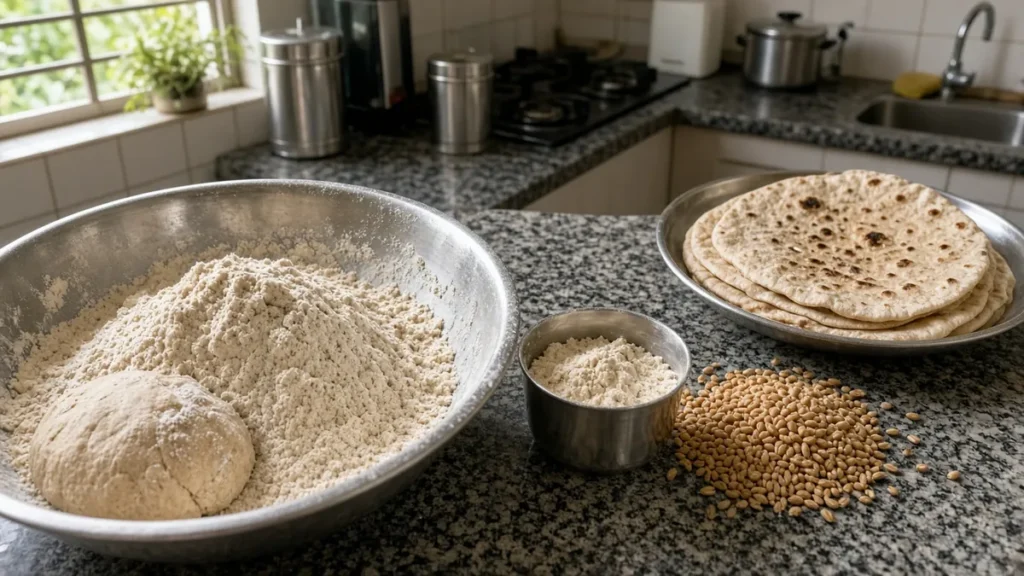
Have you ever wondered why stone ground flour is better in the eyes of so many Indian home cooks? Ask an elder in any village or small town and you will hear the same answer: atta from the local chakki simply tastes and feels different. In this guide, Nath Mills, a chakki flour mill in Tanda, Ambedkar Nagar, explains seven practical, kitchen-level reasons people prefer stone ground flour, along with a few honest points to keep in mind before you switch.
What is stone ground flour?
Stone ground flour is grain that is milled between two grinding stones in a chakki, instead of between fast steel rollers in a large factory. The grain is ground in one pass, so the whole grain goes into the flour. This is the traditional way atta, besan, makka ka atta and many other desi flours have been made in India for generations.
If you want to know how a chakki actually works, read our guide on stone ground atta. This post focuses on a different question: what difference you notice at home when you cook with it.
Why stone ground flour is better: 7 reasons home cooks give
1. A fuller, more natural taste
The most common reason is taste. Many families say rotis made from chakki atta taste more “wheaty” and have a mild, natural sweetness. Since the whole grain is ground together, the flour keeps the character of the grain it came from.
2. A familiar aroma while cooking
Fresh stone ground atta has a light, earthy smell that becomes stronger when a roti puffs up on the tawa. For many people this smell is part of what makes a meal feel like home.
3. A texture that suits Indian breads
Chakki flour is usually slightly grainy rather than powder-fine. Many cooks find that this texture gives soft rotis and phulkas, flaky parathas and puris that hold their shape. The dough also feels easy to work with once you get used to how much water it takes.
4. Fresher flour from small batches
A local chakki grinds in small batches, often close to the time you buy. Fresher flour usually means better smell and taste. Our Usha Bhog chakki atta has no added preservatives, so we suggest buying a pack size you can finish comfortably.
5. You know where your flour comes from
When you buy from a mill near you, you can see the chakki, ask questions and speak to the people who grind your flour. That trust matters to many families, especially those who have bought from the same mill for years.
6. You can grind your own grain
At a chakki you can bring your own wheat or rice and watch it being ground. At Nath Mills in Rampur Kalan, Tanda, grinding for wheat and rice is listed at ₹2 per kg. Farmers and families who store their own grain often prefer this because they know exactly what went into their atta.
7. One method for many desi flours
The same stone grinding works for many grains and pulses. That is why a chakki can give you wheat atta, Makka Ka Atta for makka ki roti, Chawal Ka Aata for rice rotis and chilla, besan, jau ka atta and sattu, all with a similar homely feel.
Stone ground flour at a glance
| What you notice | Stone ground (chakki) flour | Factory roller-milled flour |
|---|---|---|
| Taste | Fuller, grain-like taste | Milder, more uniform |
| Texture | Slightly grainy | Very fine and smooth |
| Batch size | Small batches | Very large batches |
| Grinding your own grain | Usually possible at a local chakki | Not possible |
| Best for | Rotis, parathas, puris, desi recipes | Wide range of uses |
For a full side-by-side comparison, see our post on chakki atta vs roller milled atta.
Things to keep in mind
Stone ground flour is a great choice for everyday Indian cooking, but it does need a little care:
- Use it within a reasonable time. Fresh flour without added preservatives is best used while it is fresh, so match the pack size to your family’s use.
- Store it well. Keep flour in a clean, dry, airtight steel or food-grade container, away from heat and moisture. Use a dry spoon or katori every time.
- Adjust the water. Chakki atta may take slightly more or less water than you are used to. Add water little by little while kneading, and rest the dough for 15 to 20 minutes.
- Sieve if you like it finer. If you prefer a finer texture for some recipes, you can sieve the flour, though most families use it as it is.
How to tell if your flour is really stone ground
- It feels slightly grainy when you rub it between your fingers.
- It has a mild, natural smell of the grain.
- The seller can tell you where and how it was ground.
- You can visit the mill, see the chakki or get your own grain ground there.
How to buy stone ground flour from Nath Mills
You can order our chakki-milled flours on nathmills.in. Usha Bhog chakki atta is available in 5 kg (₹180), 10 kg (₹350) and 25 kg (₹850) packs. You can also visit our mill at 129, Rampur Kalan, Tanda, Ambedkar Nagar, Uttar Pradesh 224190, or call +91 95111 45377 or +91 73985 16177. Our email is nathmills0.1@gmail.com.
Frequently asked questions
Is chakki atta the same as stone ground flour?
Yes. Chakki atta is the common Indian name for wheat flour that is stone ground in a chakki.
Why do rotis from stone ground atta taste different?
The whole grain is ground together in one pass, so the flour keeps more of the grain’s natural taste and slightly grainy texture. Many cooks say this gives rotis a fuller taste and aroma.
Does stone ground flour need special storage?
It needs the same care as any fresh flour: a clean, dry, airtight container kept away from heat and moisture. Buy a pack size you can finish while it is fresh.
Can I get my own wheat ground at Nath Mills?
Yes. You can bring your wheat or rice to our chakki in Rampur Kalan, Tanda. Grinding for wheat and rice is listed at ₹2 per kg.
Which Nath Mills flours are stone ground?
Our atta and other flours, including Usha Bhog atta, Chana Besan, Makka Ka Atta, Chawal Ka Aata, Jau Ka Atta and Matar Besan, are chakki-milled at our mill in Tanda.